-
-
-
Saiyad Bahri- Chandi Road, Hilsa, Nalanda- Bihar-801307
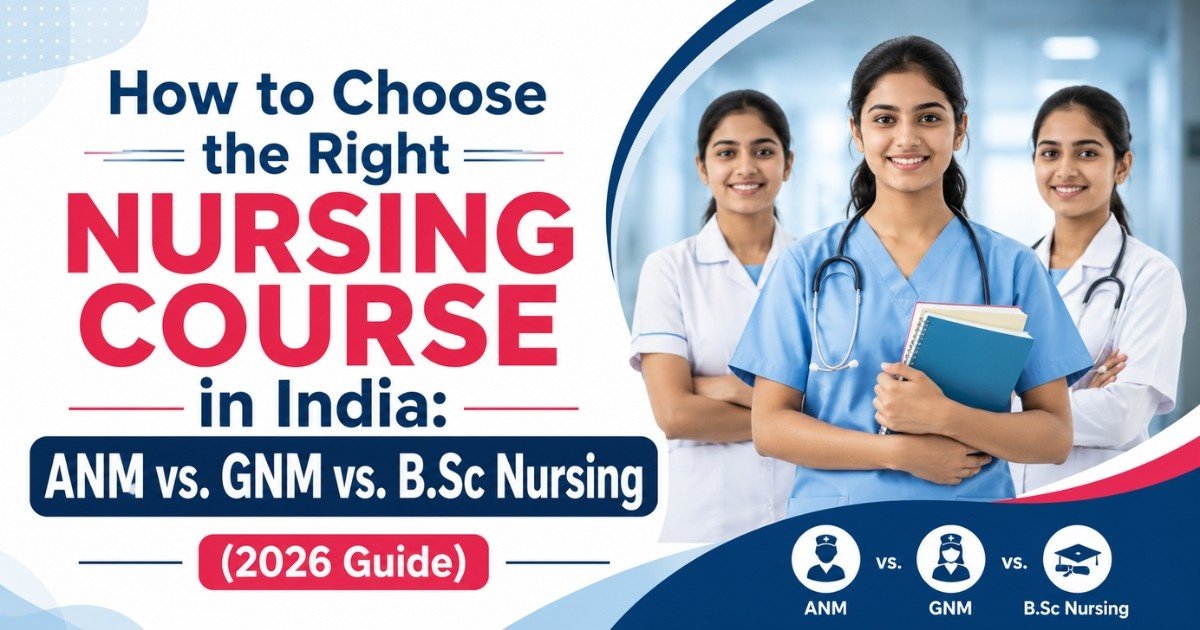
How to Choose the Right Nursing Course in India: ANM vs. GNM vs. B.Sc Nursing (2026 Guide)
Rohit Kumar
June 08, 2026
How to Choose the Right Nursing Course in India: ANM vs. GNM vs. B.Sc Nursing (2026 Guide)
Confused between ANM, GNM, and B.Sc Nursing? Read our comprehensive 2026 guide on the best nursing courses in India, eligibility, career scope, and FAQs.
"Every patient remembers the care they received long after they forget the treatment."
The global healthcare industry is evolving rapidly, and the demand for skilled, compassionate, and highly trained nursing professionals has never been higher. For students passionate about making a difference in people’s lives, nursing offers a highly respected and secure career path with opportunities to work both in India and abroad.
However, stepping into the medical field can be confusing when you are faced with multiple educational pathways. Should you pursue ANM, GNM, or a B.Sc in Nursing?
In this comprehensive guide, we will break down the top nursing courses in India, their eligibility criteria, career scope, and how to choose the right one for your future in 2026.
Why Choose a Career in Nursing in 2026?
Before diving into the courses, it is essential to understand why nursing remains one of the most sought-after professions:
- Recession-Proof Job Security: Healthcare is a necessity. Nurses are always in demand, regardless of the economic climate.
- Global Opportunities: Indian nurses are highly respected worldwide. Countries like the UK, USA, Canada, Australia, and Germany actively recruit qualified Indian nurses.
- Diverse Career Paths: From critical care and pediatrics to psychiatric nursing and hospital administration, the specialization options are endless.
- Personal Fulfillment: Few careers offer the emotional reward of directly saving lives and comforting patients during their most vulnerable moments.
Top Nursing Courses in India Explained
If you have completed your 10+2 (preferably with Physics, Chemistry, and Biology), you are eligible for several nursing programs. Here is a detailed look at the most popular options:
1. ANM (Auxiliary Nurse Midwife)
- Duration: 2 Years
- Eligibility: 10+2 passed (Arts, Science, or Commerce) with a minimum of 40-50% marks.
- Focus: ANM is a certificate-level program focused primarily on community health, family planning, immunization, and basic midwifery.
- Career Scope: ANM graduates mostly work in primary health centers (PHCs), community health programs, and local clinics. It is the quickest route to entering the healthcare workforce.
2. GNM (General Nursing and Midwifery)
- Duration: 3.5 Years (3 Years of academic study + 6 months of mandatory internship)
- Eligibility: 10+2 passed with English, Physics, Chemistry, and Biology (PCB) with at least 40% marks.
- Focus: GNM is a diploma-level program that provides comprehensive training in general nursing, surgical nursing, pediatric nursing, and midwifery.
- Career Scope: GNM nurses are the backbone of Indian hospitals. They can work as Staff Nurses in private and government hospitals, or pursue higher education like Post Basic B.Sc Nursing later on.
3. B.Sc Nursing (Basic)
- Duration: 4 Years (Including clinical internships)
- Eligibility: 10+2 with PCB and English from a recognized board, with a minimum of 45-50% aggregate marks.
- Focus: This is a full-fledged undergraduate degree that offers in-depth knowledge of nursing sciences, anatomy, physiology, pharmacology, and advanced clinical practices.
- Career Scope: B.Sc graduates have the highest career growth potential. They are preferred for supervisory roles, teaching positions, and are highly eligible for international recruitment. They can also pursue an M.Sc Nursing or a Master of Hospital Administration (MHA).
4. Post Basic B.Sc Nursing
- Duration: 2 Years
- Eligibility: Registered Nurse with a GNM diploma.
- Focus: Designed for working nurses who want to upgrade their diploma to a full degree to unlock better salary packages and managerial roles.
ANM vs. GNM vs. B.Sc Nursing: Which One is Right for You?
Choosing the right course depends entirely on your career goals, time commitment, and academic background:
- Choose ANM if: You want to enter the workforce quickly (in just 2 years) and are primarily interested in community health and rural healthcare services.
- Choose GNM if: You want a strong foundation in clinical hospital nursing, want to work as a Staff Nurse in major hospitals, and are looking for a cost-effective diploma route.
- Choose B.Sc Nursing if: You want a comprehensive degree, aspire to work abroad, aim for top-tier government jobs, or plan to pursue higher studies (M.Sc/Ph.D.) and administrative roles in the future.
What to Look for in a Top Nursing College?
Your choice of college is just as important as the course you choose. When evaluating a nursing institute, always check for:
- Affiliation & Recognition: Ensure the college is affiliated with a recognized university and approved by the Indian Nursing Council (INC) and State Nursing Council.
- Clinical Training & Hospital Tie-ups: Nursing is a practical profession. The college must have tie-ups with multi-specialty hospitals for hands-on patient care experience.
- Simulation Labs: Modern nursing labs with mannequins and medical equipment are crucial for practicing procedures before treating real patients.
- Experienced Faculty: Look for institutes with highly qualified tutors and clinical instructors who provide mentorship.
Frequently Asked Questions (FAQs)
Q1. Is NEET required for B.Sc Nursing in India?
Answer: While NEET is mandatory for MBBS and BDS, it is not strictly mandatory for B.Sc Nursing across all states. However, some states and deemed universities use NEET scores for nursing admissions. Many states conduct their own separate state-level nursing entrance exams or merit-based counseling based on 12th-board marks.
Q2. Can I go abroad after completing GNM?
Answer: Yes, you can go abroad after GNM, but you will need to clear the respective country's licensing exams (like the NCLEX for the USA, CBT/OSCE for the UK, or OET for Australia). However, B.Sc Nursing graduates often have an easier time meeting the educational equivalency requirements of foreign countries.
Q3. What is the starting salary of a Staff Nurse in India?
Answer: The starting salary varies based on the hospital and location. In government hospitals, a Staff Nurse can earn between ₹35,000 to ₹50,000 per month. In private corporate hospitals, freshers typically start between ₹18,000 to ₹25,000 per month, which increases rapidly with experience and specialization.
Q4. Can I do B.Sc Nursing after completing GNM?
Answer: Yes! If you have completed a GNM diploma and are a registered nurse, you can directly enroll in a Post Basic B.Sc Nursing program, which is a 2-year degree course designed specifically for diploma holders.
Start Your Nursing Journey with the Best Institute in Bihar
If you are a student in Bihar looking for a premier institution to build a successful career in healthcare, Gautam Institute of Nursing (GIN) in Hilsa is your ideal destination. Approved by the relevant statutory bodies, GIN offers comprehensive programs in ANM, GNM, B.Sc Nursing, and Post Basic B.Sc Nursing. The institute is equipped with state-of-the-art nursing simulation labs, extensive clinical training partnerships, experienced faculty, and excellent hostel and transport facilities to ensure a safe and enriching learning environment. Take the first step toward a rewarding career in healthcare today by exploring the courses and admission details at gautamnursing.
Latest Blogs

Flexibility
You can study anytime anywhere
Lower Costs
Our Courses are more affordable
Documentation
All the details will be safely stored
.png)